Anesthesiology · University of Illinois at Chicago
Michael R. Fettiplace,
MD, PhD
Identification, prevention and treatment of adverse events from local anesthetics.
I am a clinician scientist interested in safety and efficacy within anesthesia, with a specific focus on local anesthetics. I study the identification, prevention and treatment of adverse events from local anesthetics — from signal detection in national and global adverse-event databases, through the dosing limits that determine whether toxicity occurs at all, to the evidence behind the treatments given when it does.

Research
- 01 Pharmacovigilance Signal detection for local anesthetic harm in FAERS, VigiBase and the National Poison Data System
- 02 Toxicity & dosing Defensible dosing limits for the blocks and continuous catheters used in current practice
- 03 Lipid emulsion efficacy Meta-analyses asking how well lipid emulsion works, and how good the evidence behind it is
- 04 Artificial intelligence Delphi consensus on disclosure and responsible use of language models in publishing
01 Pharmacovigilance
Finding the harm
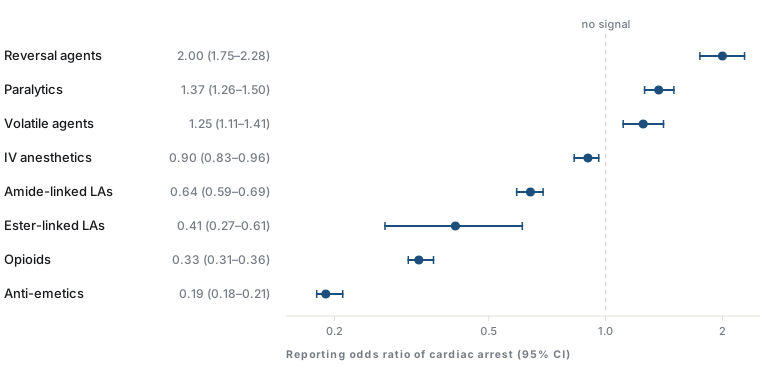
Randomized trials are not powered to detect the rare catastrophes that define the safety of local anesthetics and other anesthetic drugs. Therefore we need to turn to case reports and large databases in order to identify such events. We use systematic methods to evaluate such rare events including systematic reviews of case reports and disproportionality methods. We have previously interrogated the FDA Adverse Event Reporting System, the WHO VigiBase database and the National Poison Data System in order to identify signals of anesthetic drug induced morbidity and mortality.
We have previously evaluated local anesthetics' contribution to mortality and identified associations with high-dose lidocaine, neuraxial methods and ropivacaine catheters. Second, we have recently identified novel sources of cardiac arrest associated with anesthetic agents with signals for sugammadex, sevoflurane, dexmedetomidine and remifentanil.
02 Toxicity & dosing
Preventing it
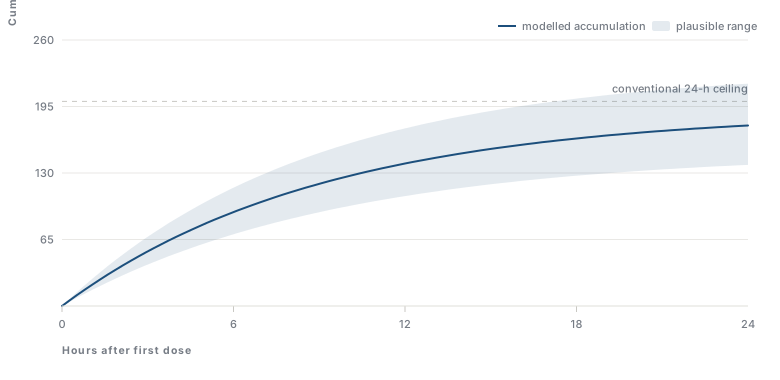
The familiar milligram per patient ceilings for bupivacaine and ropivacaine derived from single-injection techniques studied decades ago. Modern practice looks nothing like that: large-volume fascial plane blocks, bilateral truncal catheters running for days, and combinations layered on top of surgical infiltration. Applied to those techniques the old ceilings are simultaneously too permissive in some situations and needlessly restrictive in others.
This work reconstructs dosing guidance from what is known about absorption, accumulation and clearance — cataloguing published adult and pediatric truncal catheter practice, comparing the methods available for predicting safe redosing, and examining weight-based scaling in the blocks where it most often goes wrong. The output is meant to be usable at the bedside to prevent dose-based adverse events. It is also the evidence base that practice advisories on systemic toxicity draw from.
03 Lipid emulsion
How well does it work?
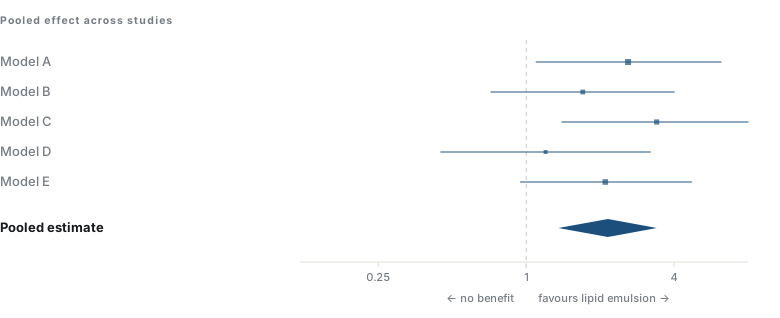
Intravenous lipid emulsion is part of the treatment regimen for local anesthetic systemic toxicity, and is given widely for other lipophilic drug overdoses. My PhD work began evaluating the mechanism by which lipid reverses bupivacaine induced cardiac toxicity. Since then I have broadened the quesion to understand what the cumulative evidence says: how well does it work and what toxicities may benefit from treatment with lipid emulsion.
The answer depends on what you pool. Our recent 2026 systematic review and meta-analysis of lipid emulsion for non-local-anesthetic poisoning found the benefit was agent-dependent with many low-quality studies contributing to the conclusions. Earlier meta-analytic work established a survival benefit in animal models of local anesthetic toxicity, but a subsequent systematic review of that same literature documented substantial heterogeneity and risk of bias — small studies, inconsistent controls, and experimental models poorly matched to the clinical question. Efficacy claims are only as good as the experiments underneath them, and a large part of this work is holding that literature to a proper standard.
04 Artificial intelligence
Disclosure standards
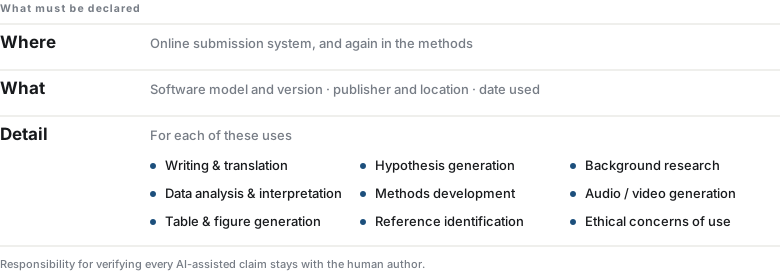
Large language models entered medical writing faster than the norms governing them. Authors, reviewers and editors are all now using them, often without a shared understanding of what must be declared. Blanket prohibitions are unenforceable; blanket permissiveness erodes accountability for what appears in the literature.
I have used modified Delphi methodology — first within the Regional Anesthesia & Pain Medicine community, then across the editors-in-chief of anaesthesia and pain medicine journals internationally — to converge on what should be disclosed, by whom, and in what form. The recommendations separate uses that require declaration from those that do not, and place responsibility for verification squarely with the human author.
Resources
Guidelines & references
Primary sources for clinicians managing local anesthetic systemic toxicity and perioperative cardiac arrest.
- ASRA Pain Medicine practice advisories Guidelines and practice advisories, including the Third Practice Advisory on Local Anesthetic Systemic Toxicity
- ASRA LAST treatment checklist The 2020 checklist — the document to have printed and in the block cart
- AHA CPR & ECC guidelines American Heart Association guidelines for cardiopulmonary resuscitation and emergency cardiovascular care
- ASA PeRLS Perioperative Resuscitation and Life Support — the ASA's operating-room-specific alternative to ACLS
- lipidrescue.org Clearinghouse for lipid emulsion therapy — dosing, case registry and literature
Contact
Get in touch
Collaborations on pharmacovigilance, dosing and guideline work are welcome, as are residents and students looking for a research project.
Department
Anesthesiology
University of Illinois at Chicago
College of Medicine